Friday, November 21st, 2025

Replacing animals in science

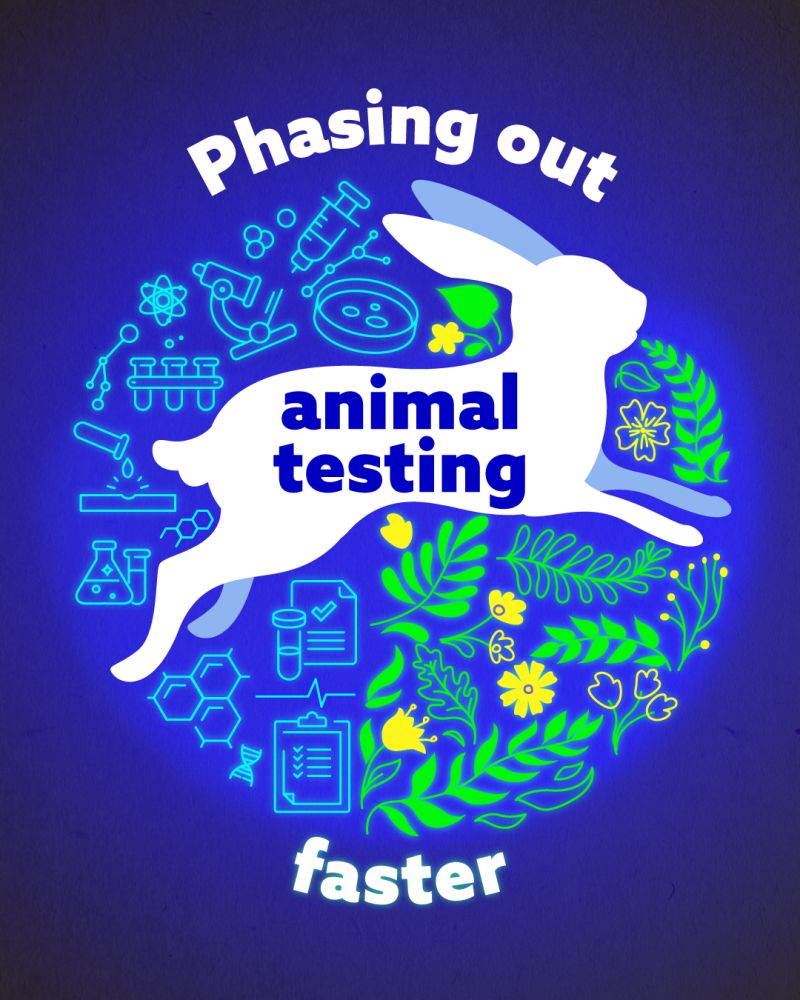
The UK Government has (11.11.2025) published its strategy for “Replacing animals in science”, to deliver on a key pledge from the Labour Party’s election manifesto to set out a clear plan to reduce and ultimately phase out the use of animals in research.
The Alliance for Human Relevant Science welcomes this turning point in government-led promotion of human-relevant science.

The roadmap: a starting point for change

The government’s strategy sets out a framework for how animal experiments will begin to be replaced in the UK. It introduces a tiered model for prioritising which tests can be phased out first, alongside a series of commitments aimed at supporting researchers, funders, and regulators to adopt non-animal methods.

The government describes this strategy as a beginning, with the long-term goal of eliminating animal use in “all but exceptional circumstances.”

A tiered approach to phasing out animal tests

The roadmap groups animal tests into three categories:

  • Basket 1: Tests ready for rapid replacement
    Includes: pyrogen testing, skin and eye irritation, botox potency tests
  • Basket 2: Tests needing further development
    Includes: forced swim test, fish toxicity, pharmacokinetic studies
  • Basket 3: Tests with no current validated alternatives,
    Includes: fish endocrine disruption tests

Set phase-out targets

The government has committed to specific targets for a number of outdated animal tests, such as:

  • Rabbit pyrogen test: to be phased out by the end of 2025
  • Botulinum toxin potency testing: to be replaced by 2027
  • Forced swim test: no new licences; existing ones expire by 2028

Commitments to support the transition

The strategy also includes a range of supporting actions to help embed non-animal methods across the research system:

  • A new UK Centre for the Validation of Alternative Methods (UKCVAM) by 2026
  • A £30 million preclinical translational models hub to develop human-relevant models
  • ‘Validation Accelerator’ grants to fast-track promising alternatives
  • A public dashboard of key performance indicators from 2026
  • A restart of the public attitudes survey on animal research
  • Foundational training in non-animal methods for early-career researchers
  • Support for funders to scrutinise animal use more rigorously in grant decisions
  • Regular publication of priority areas for alternative methods
  • Encouragement for journal editors to publish studies using non-animal approaches
  • Support the upskilling of regulatory assessors and enable engagement between regulators and companies to support the application of non-animal approaches
  • A cross-governmental Ministerial group on alternative methods, chaired by the Science Minister

Together, these commitments signal a shift in how the UK approaches animal research, but they also highlight where further ambition is needed. Our Alliance and all partner organisations stand ready to help, encourage and support these actions wherever we can to drive progress and increase its scale and speed.

The entirely new tone from government, recognising that: “The benefits to addressing these barriers are far reaching and go beyond replacing the use of animals… delivering both scientific advancements and a meaningful cultural shift in animal use” is refreshing and wonderful to hear.

Celean Camp, Chair of the Alliance and CEO of Replacing Animal Research, says: “We’ve long argued that the replacement of animals in science cannot be driven without proper consideration and integration of issues around the development, validation and uptake of NAMs. I’m delighted to see the serious efforts around cross departmental working and integration of these areas including in this document. This strategy provides a springboard for UK life sciences to go further, faster, and we look forward to supporting funders, establishments, and researchers to put it into action.”

Thursday, October 9th, 2025

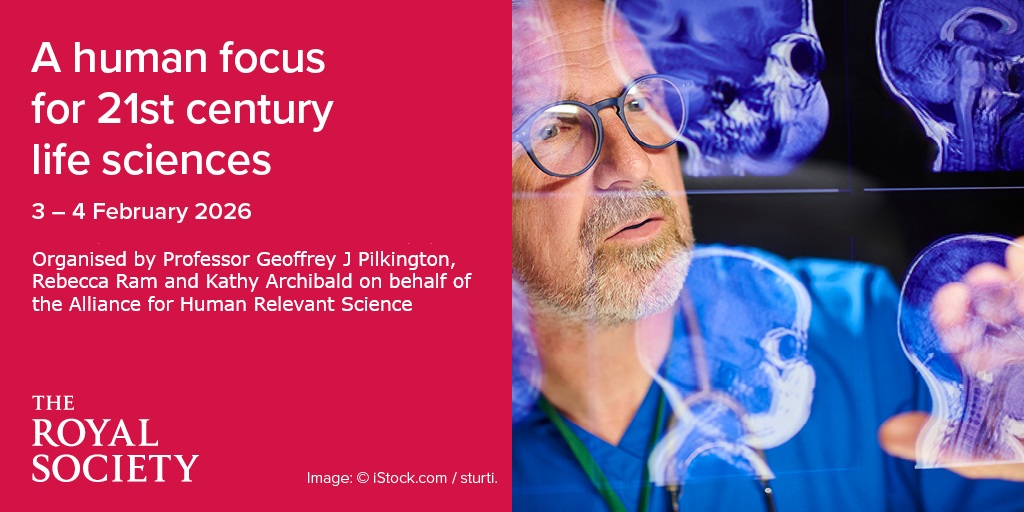
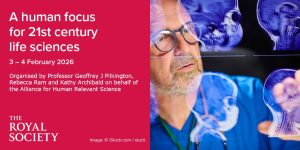
Reserve your place at our Royal Society event ‘A human focus for 21st century life sciences’ – 3 -4 Feb 2026

The Alliance is delighted to invite you to an exciting and unique two-day scientific meeting in London on 3rd and 4th February 2026: A human focus for 21st century life sciences
 
This free event is sponsored by the Royal Society and will be held at One Birdcage Walk.
 
This “science+” discussion meeting will showcase the transformative value of innovative, human-focused biomedical technologies, which are providing invaluable insights into human diseases and could underpin the development and optimal use of new and repurposed medicines. It will bring together researchers, clinicians, industries, regulators, policymakers and others to discuss key challenges and how to surmount them to accelerate their advantageous development and implementation. 

We are looking for your input, for lively discussions and a real exchange of ideas, to make this meeting of minds have tangible impact

To request an invitation to attend the event in person (only 200 spaces!) or register to watch online, please go to the Royal Society event page  
 
We hope to see you there!

eflyer_final

Tuesday, September 2nd, 2025

Please sign our petition

It is wonderful that the government is currently working on a roadmap to phase out animal testing. But if it does not include specific targets and clear timelines, it will not alter the status quo, which is deeply entrenched and resistant to change.
Sign this petition to call for an ambitious and detailed UK roadmap for the phase-out of animal research and testing. This is a once-in-a-lifetime opportunity – we must make sure it really delivers!

Thursday, August 7th, 2025

Lush Prize joins the Alliance for Human Relevant Science

The Alliance is pleased to welcome the Lush Prize as its newest organisational member.
Launched in 2012, the Lush Prize rewards initiatives across science and campaigning that work to end or replace animal testing with modern scientific methods. Since then it has awarded prize funding of almost £3 million to 140 successful projects worldwide across several categories; Science, Training, Public Awareness, Lobbying, Political Advocacy and Young Researchers, as well as further awards and commendations to recognise Political Achievement and Major Science Collaborations. Alongside funding awards, the Prize continues its work in communications, policy and outreach on the need to transition from animal-based research to approaches which are more human and environmentally relevant.
The aims of the Lush Prize align with the objectives of the Alliance to;
* Support better science for better health;
* To save lives – human and animal – through improved research, development safety and efficacy testing of medicines and other chemicals;
* To save money through more relevant research.

humanrelevantscience
lushprize

Friday, February 28th, 2025

Our new publication in Frontiers in Drug Discovery: How complex in vitro models are addressing the challenges of predicting drug-induced liver injury

We are very pleased to share our recently published paper in Frontiers in Drug Discovery on How complex in vitro models are addressing the challenges of predicting drug-induced liver injury.

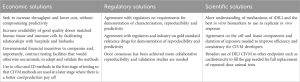
Predicting which drugs might have the potential to cause drug-induced liver injury (DILI) is highly complex and the current methods, 2D cell-based models and animal tests, are not sensitive enough to prevent some costly failures in clinical trials or to avoid all patient safety concerns for DILI post-market. Animal-based methods are hampered by important species differences in metabolism and adaptive immunity compared to humans and the standard 2D in vitro approaches have limited metabolic functionality and complexity. The Alliance for Human Relevant Science hosted a workshop at the Royal Society, London entitled Drug-Induced Liver Injury (DILI): Can Human-Focused Testing Improve Clinical Translation? The conclusion was that complex in vitro models (CIVMs) provide a significant step forward in the safety testing paradigm. This perspective article, written by Dr. Katy Taylor and Alliance members representing collaboration across academia and industry, provides a ‘state of play’ on liver CIVMs with recommendations for how to encourage their greater uptake by the pharmaceutical industry.

Full citation: Taylor, K, Ram, R, Ewart, L, Goldring, C, Russomanno, G, Aithal, GP, Kostrezewski, T, Bauch, C, Wilkinson, JM, Modi, S, Kenna, JG, Bailey, J. Perspective: How complex in vitro models are addressing the challenges of predicting drug-induced liver injury.  Front. Drug Discov. 5 – 2025.

Read the full paper here

Wednesday, February 26th, 2025

Safer Medicines Trust publishes an evaluation of the UK’s Early Access to Medicines Scheme

Our paper on the UK’s Early Access to Medicines Scheme has just been published. We found that many drugs expedited as part of the scheme do not have an established safety profile, while several appear to have significant risks for patients. We argue that the Medicines and Healthcare products Regulatory Agency needs to insist on more robust evidence before fast tracking drugs, and that among other things, the safety of expedited drugs might be improved with greater preclinical use of human biology-based technologies.
Read the paper here: https://lnkd.in/dHSi4FkZ
Safer Medicines Trust

No alt text provided for this image
Thursday, January 23rd, 2025

One Month remaining to apply for Humane Research Trust Funding Grants

There’s only 1 month left to apply for our latest round of grant funding. If you’re a principal investigator seeking funding for a PhD or post-doctoral led project, make sure to get your application in before the deadline this February.

We’re looking for projects that advance human health and understanding of disease, as well as promote the replacement of animals in research.

Begin your application today: https://lnkd.in/efXtxKV6

Tuesday, December 10th, 2024

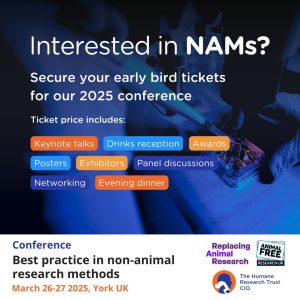
Best Practice In Non-Animal Research Methods; 26-27 March 2025, York, UK.

Are you a scientist who uses or is interested in using non-animal research methods to study human diseases?

We’re hosting a conference called ‘Best practice in non-animal research methods’, alongside two other leading UK funders of animal replacement research: Animal Free Research UK and Replacing Animal Research. You’re invited!

Expect inspiring talks, panel discussions, networking opportunities, and technology and research showcases. All of this hosted over two days at the Radisson York from 26 – 27 March 2025.

A limited run of early bird tickets are on sale now;
Academic: £199
Corporate: £299
Non-government organisation: £249
Student/early career researcher: £125

Secure your ticket here before the New Year!

Thursday, August 24th, 2023

Utrecht University’s Dr Merel Ritskes-Hoitinga awarded Animal Free Research UK’s Pioneer Medal 2023

Queen Mary University of London’s Dr Adrian Biddle and Sophie O’Kane of Karolinska Institutet recognised in inaugural next generation spotlight awards 

LEADING PROFESSOR of Evidence-Based Transition to Animal-free Innovations of Utrecht University, Dr Merel Ritskes-Hoitinga, has been awarded Animal Free Research UK’s Pioneer Medal 2023.

Now in its second year, The Pioneer Award celebrates the achievements of trailblazing scientists who conduct medical research without the use of animals. Last year the award was accepted by Dr Donald E Ingber of Harvard University.

This year also sees the announcement of two new awards, which shine a light on the next generation of inspiring animal free researchers. Dr Adrian Biddle of Queen Mary University London has been awarded the inaugural Outstanding Scientist 2023, and Sophie O’Kane of Karolinska Institutet is first to be awarded Early Career Scientist 2023.

All three winners will receive a specially commissioned accolade during Animal Free Research UK’s Science Conference, taking place in Cambridge over October 4-5th, and each will deliver a lecture on their pioneering contribution to animal free research.

Announcing the winners, Animal Free Research UK’s Science Director Dr Jarrod Bailey said:

“Dr Merel Ritskes-Hoitinga is an expert in her field, leading the way in enabling the adoption of ground-breaking new technologies that are revolutionising the way we conduct medical research. We are thrilled to name her this year’s Pioneer.

We are also proud to announce two new next generation spotlight awards. Our Outstanding Scientist 2023, Dr Adrian Biddle, has made a notable contribution to the field of pioneering animal-free cancer research at the Blizard Institute, Queen Mary University London, inspiring countless young scientists to follow in his footsteps. Early in her profession, Sophie O’Kane is one to watch, her enthusiasm and commitment to pursuing an animal free career shines through in her work to date.”

Pioneer Award Winner, Dr Merel Ritskes-Hoitinga, said: “It is a tremendous honour for me to receive the Animal Free Research UK Pioneer Award. I dedicate my education and research efforts to evidence-based acceleration towards the adoption of animal-free methodologies. This award serves as a motivating force propelling me towards achieving this critical objective, one that holds immense benefits for both animals and humans.”

Outstanding Scientist Winner, Dr Adrian Biddle, said: “I am deeply honoured to win this Animal Free Research award. I have witnessed, over the past decade, the fantastic work that Animal Free Research UK does to raise the profile of animal free research approaches in UK bioscience. It has been really rewarding to have been able to play a role in this. The future of animal free research is certainly bright, and I look forward to a future of technological innovation that enables further replacement of animals in research.”

Early Career Scientist Winner, Sophie O’Kane said: “Words cannot express how it feels to have been awarded the Early Career Scientist Award! To be recognised for something I have found to be as challenging as it has been fulfilling is especially rewarding, and inspires me to call upon all scientists, young and old, to reflect with an open-heart, to embrace novel alternative methods and to join us in the much needed race to replace non-human animals in human medical research.”

Animal Free Research UK CEO, Carla Owen, said: “The Pioneer Awards are a prestigious annual mark of achievement, elevating animal free research and researchers in the scientific community and inspiring the next generation of scientists.  The decisions more and more scientists like Dr Merel Ritskes-Hoitinga, Dr Adrian Biddle and Sophie O’Kane make to champion animal replacement in their work is unlocking answers to the many questions we still have about diseases. Their groundbreaking work deserves to be recognised.”